
Echidna
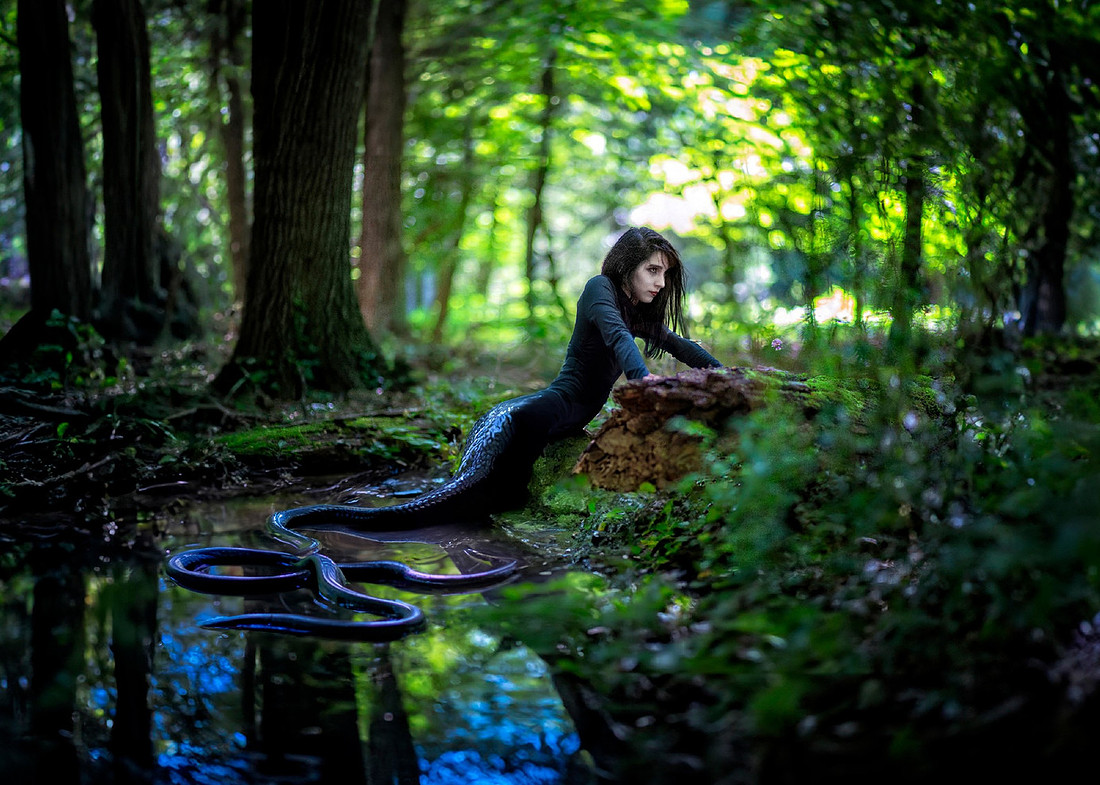
 Echidna (ϵ¨χιδνα), a prominent figure in Greek mythology, is a monstrous serpentine creature, often referred to as the "Mother of All Monsters." She is consistently depicted as a chthonic deity, combining the features of a beautiful woman and a terrifying serpent. Her dwelling place is typically described as a cave deep within the earth, or in some accounts, the mythical land of Arima, a desolate and swampy region.
Appearance and Attributes
Echidna's most distinguishing characteristic is her dual nature. Her upper body, from the waist up, is consistently portrayed as that of a striking woman, often beautiful, with dark hair. This human aspect frequently belies the monstrous reality of her lower half. From the waist down, her body transforms into that of a colossal serpent, complete with scales and a powerful tail. This serpentine lower body is often depicted as coiled, suggesting immense power and an intimate connection to the earth and water.
Mythology and Significance
As the consort of the fearsome giant Typhon, Echidna bore a terrifying brood of offspring, many of whom became notorious monsters in Greek mythology. Her progeny includes some of the most famous beasts challenged by heroes, such as the Lernaean Hydra, the Chimera, the Nemean Lion, the Sphinx, and Cerberus. Her role as a progenitor underscores her significance in the mythological landscape, representing the primal, untamed forces of nature and the chaotic origins of monstrous entities.
Echidna's existence highlights themes of hybridity and the uncanny in ancient Greek thought, embodying the dangerous allure of the unknown and the wild. Her swampy, forested habitats in mythological narratives further emphasize her connection to liminal spaces—neither fully land nor water, neither fully human nor beast—mirroring her own composite nature.
