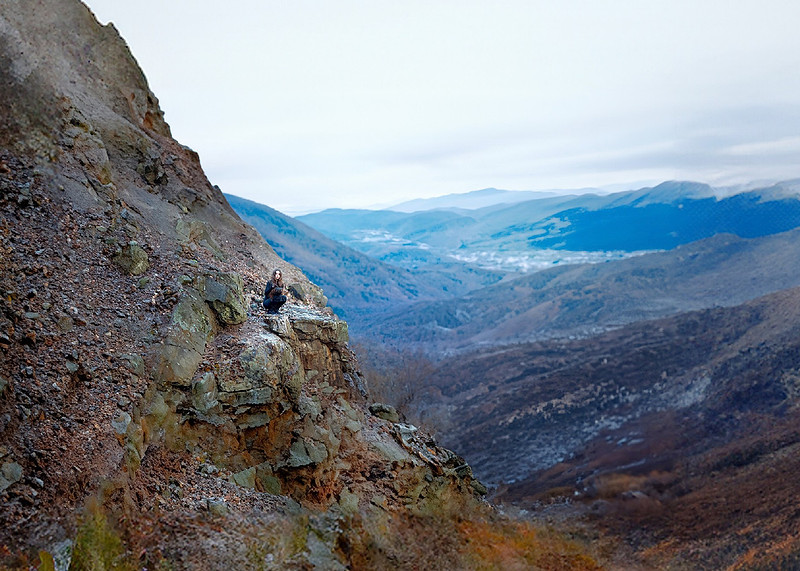
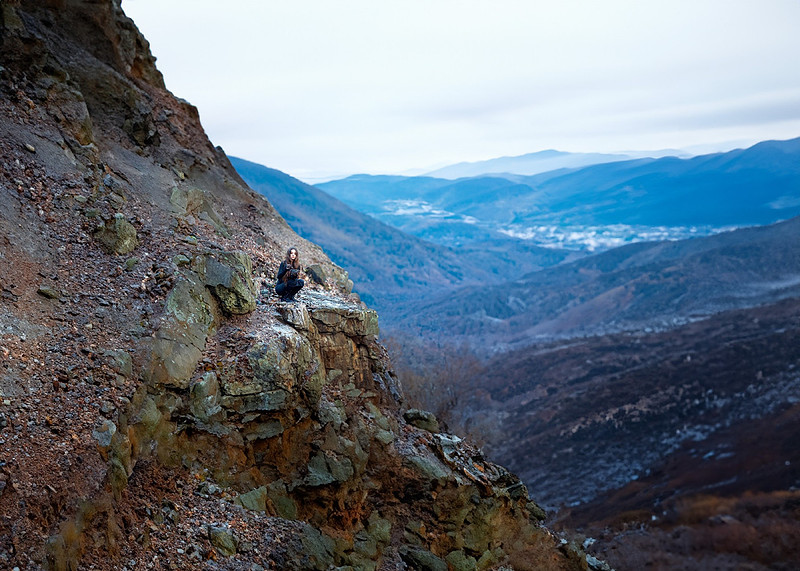
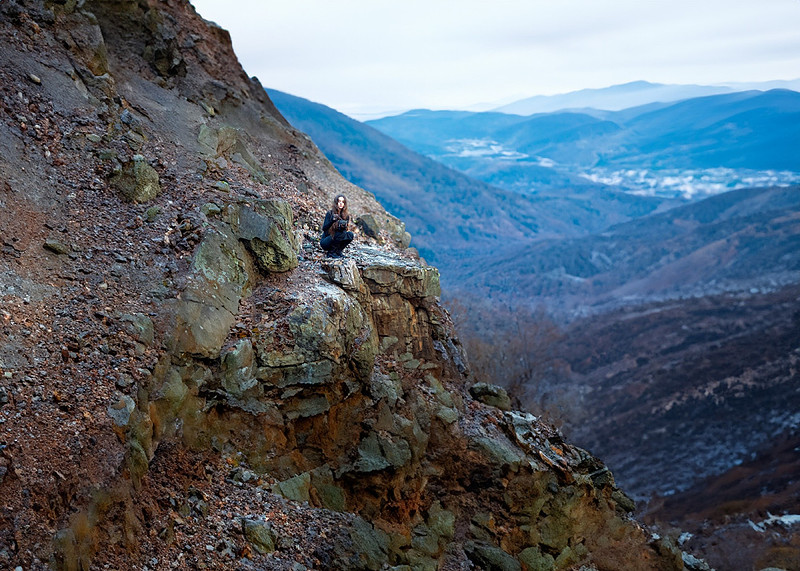
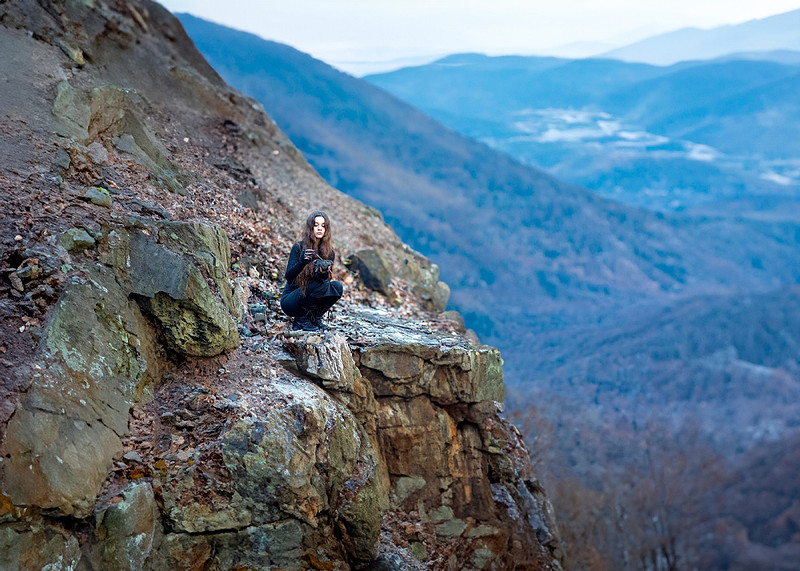
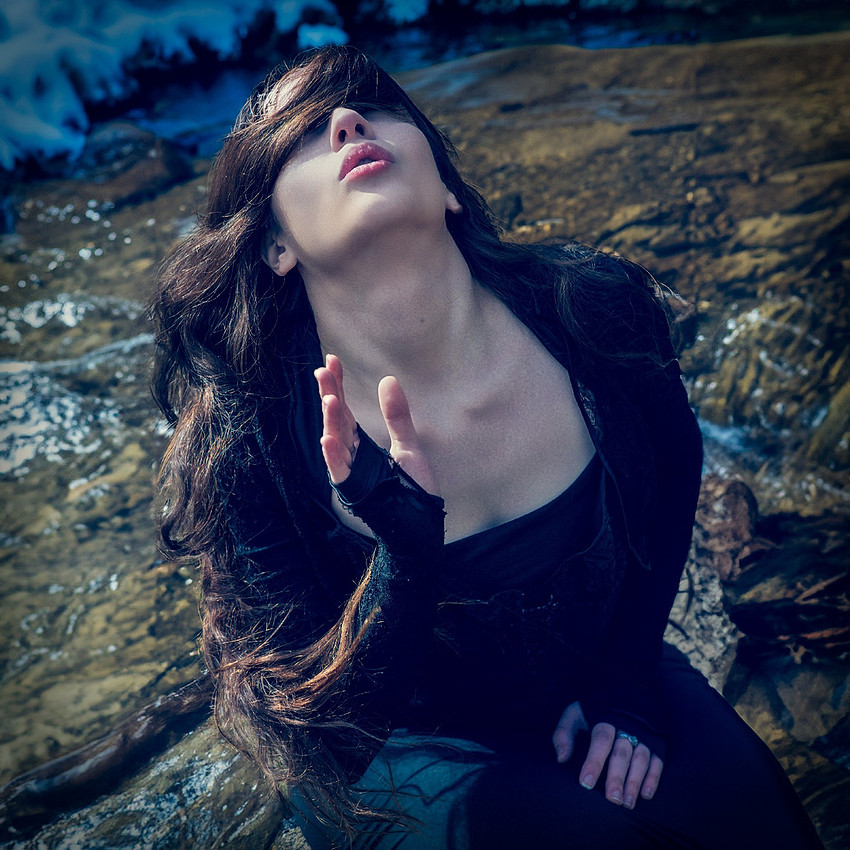
Ban Draíodóir faoi Thalamh
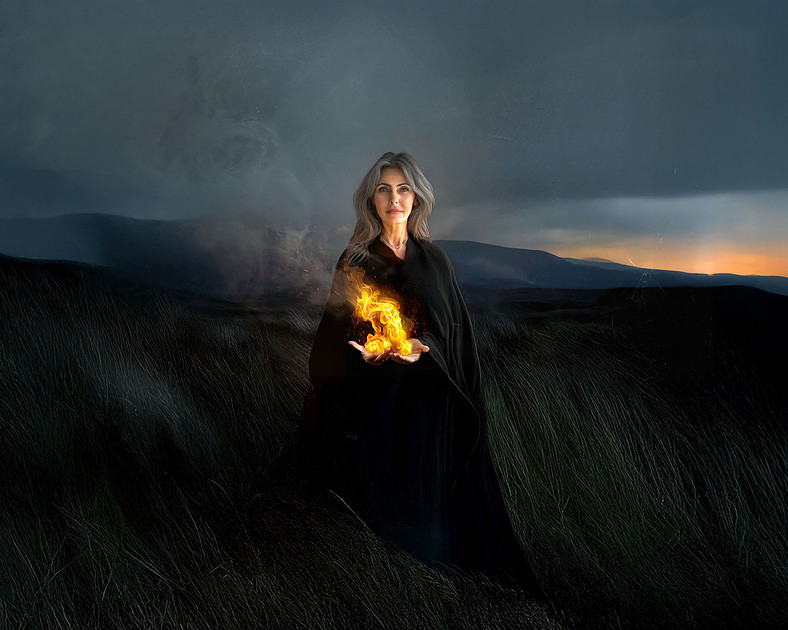
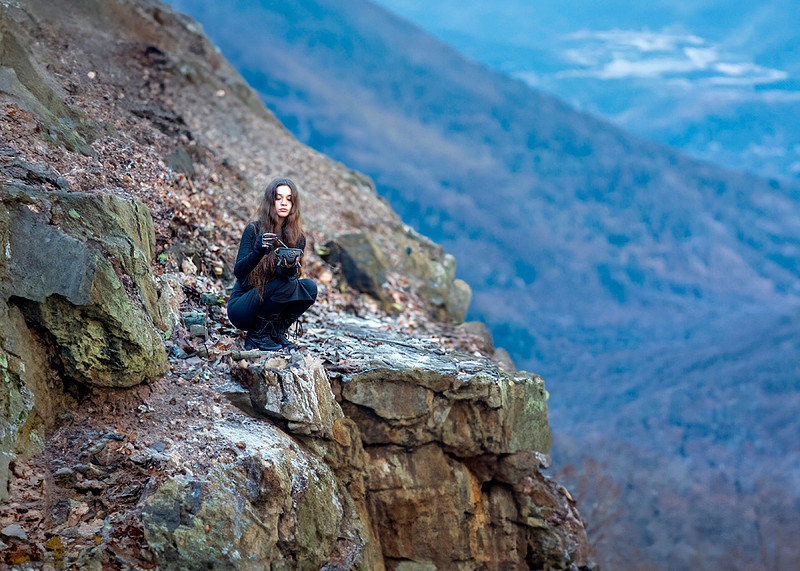
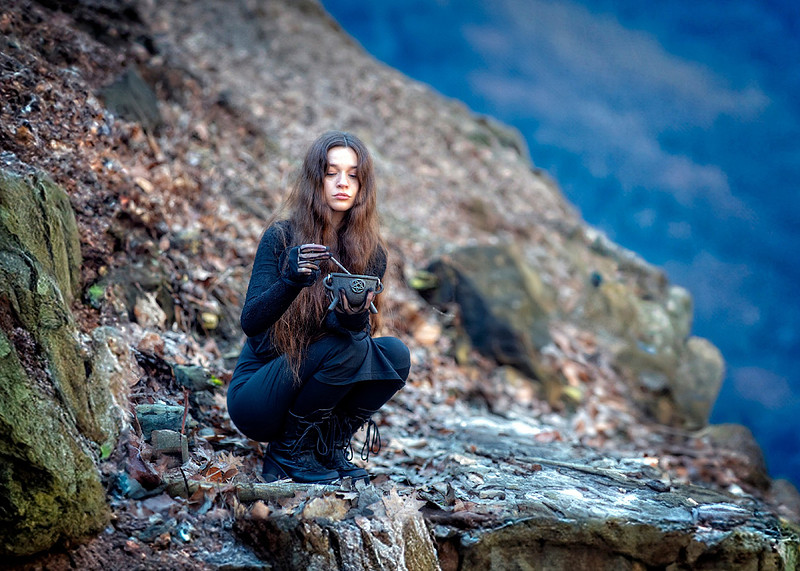
Ban draíodóir faoi thalamh, Cloiseann sí glór na gcloch,
A witch casting lightning!
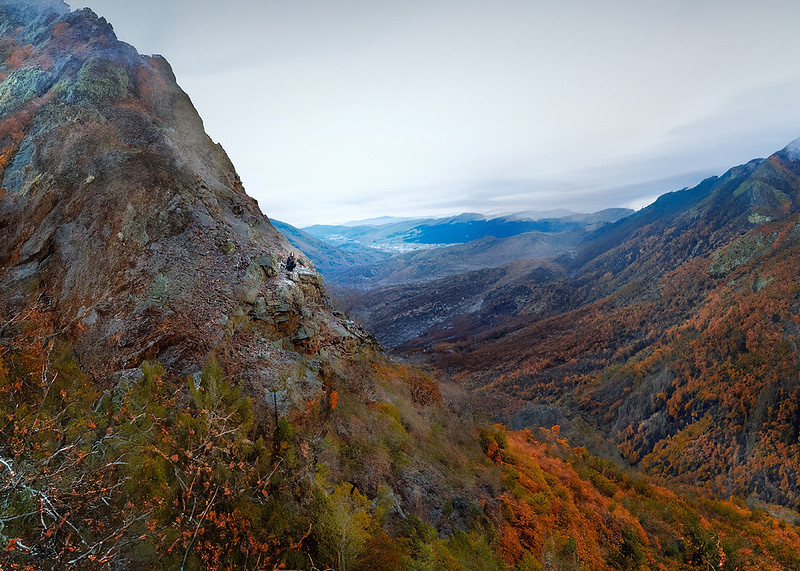
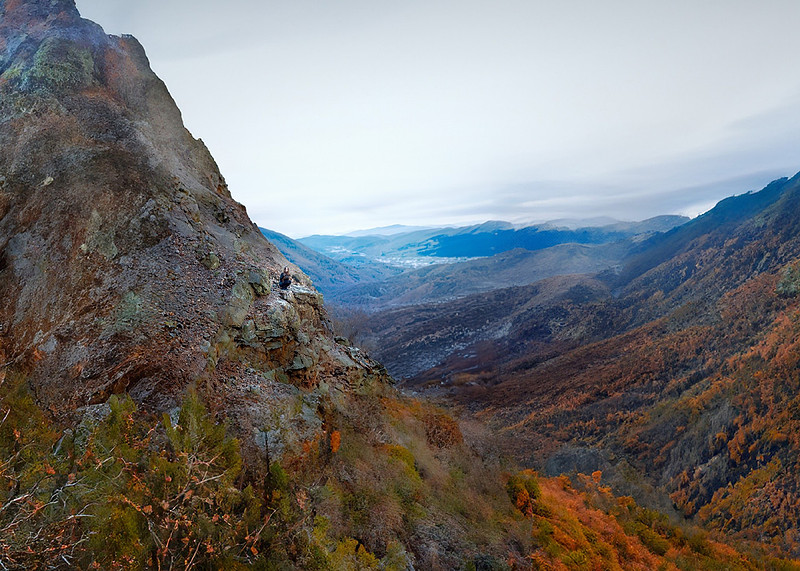
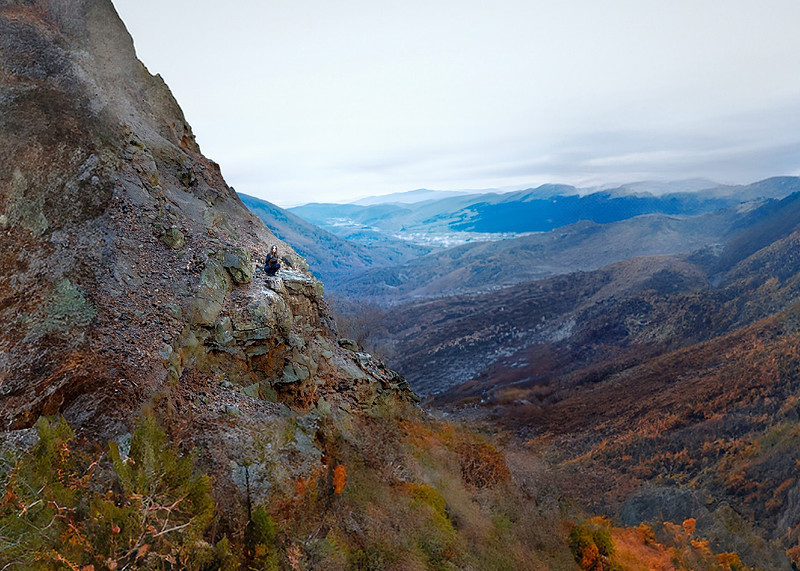
So, I was doing a photoshoot up in the mountains with my friend, Gianna, who is a witch, and we were sitting there working on a spell. We were in the middle of nowhere and this dude comes hiking by and watches us for a minute, and then he said, "You know you're going to burn in Hell for that stuff, right?" So my friend Gianna looks at me and simply says, "I got this." The next thing I know there is a bright flash of light and a sound like a giant bug zapper! Anyway, may he rest in peace.
Samhain ( November 01, 2024 )
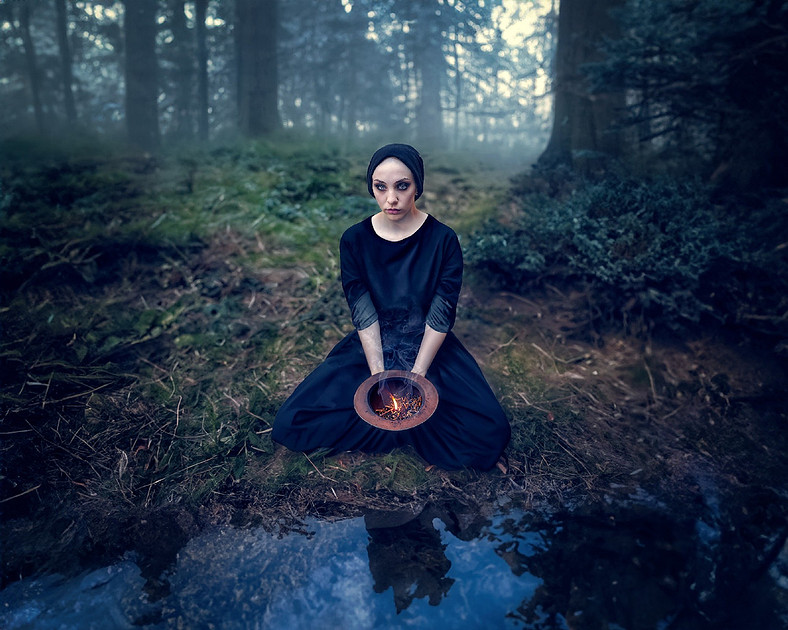
Certainly! Here's a revised blog post about Samhain, focusing on its associations with witchcraft and presented in an encyclopedic style: Samhain: A Historical and Occult OverviewSamhain (pronounced /ˈsɑːwɪn/ or /ˈsaʊɪn/) is an ancient festival deeply rooted in Celtic paganism, marking a significant transition in the Wheel of the Year. Observed from the evening of October 31st through November 1st, it traditionally signifies the end of the harvest season and the beginning of the "darker half" of the year. This period is historically recognized as a time when the veil between the mundane world and the spiritual realms thins, allowing for heightened magical and spiritual activity. Etymological RootsThe term "Samhain" originates from Old Irish, translating to "summer's end." This etymology underscores its traditional role as a liminal period, representing the natural shift from light to darkness and from abundance to scarcity in the annual cycle. Historical Significance and Occult AssociationsFor centuries, Samhain has been a focal point for practices associated with witchcraft and the occult. Its primary significance lies in the belief that the boundaries separating the living from the dead become porous. This thinning of the veil facilitates communication with ancestors and spirits, making it a powerful time for various magical workings. It was a period when the unseen forces were thought to be most active, capable of both malevolence and benevolence depending on the practitioner's intent and offerings. Traditional Practices and RitualsThroughout its history, Samhain has been intertwined with a range of practices that resonate with modern occult traditions:
Contemporary ObservancesIn modern esotericism and Neopagan traditions, Samhain continues to be a highly significant festival. It is often regarded as the Witches' New Year, symbolizing a time of deep introspection, letting go of the old, and preparing for new beginnings in the cycle of life, death, and rebirth. Celebrations frequently involve rituals for honoring the dead, shadow work, scrying, and setting intentions for the darker months ahead. Samhain's enduring presence in occult practices highlights its fundamental role as a powerful gateway between worlds, a time when the unseen becomes more accessible, and the energies of transformation are at their peak.
Ban-draoi nam Mòinteach Tuath
Ban-draoi nam Mòinteach Tuath Air mòinteach dhorcha, fo sgàil nan speur, Beanntan fiadhaich a’ coimhead oirre,
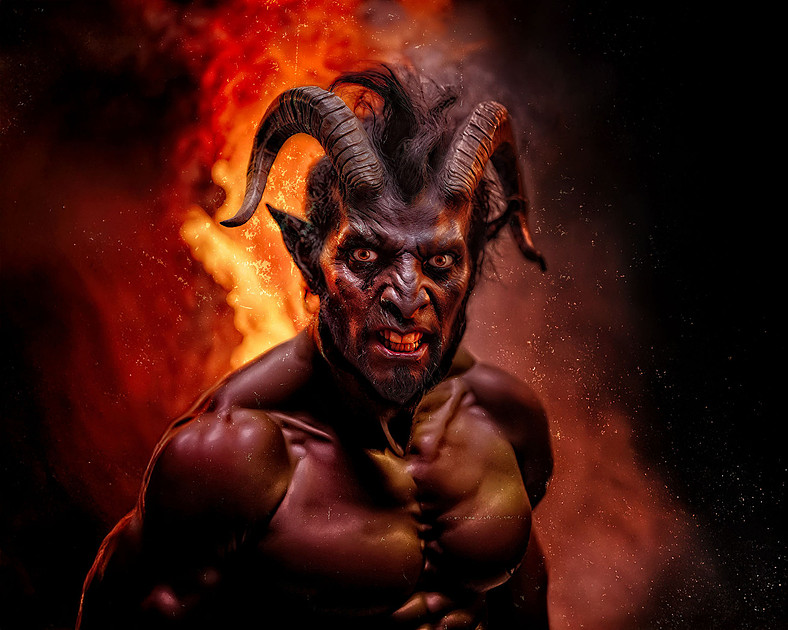
Tenebrus, the Infernal JudgeTenebrus, the Infernal JudgeTenebrus, the Infernal Judge, stands as a formidable figure in demonological lore, revered and feared as the sovereign arbiter of the underworld’s deepest shadows. His dominion is that of primordial darkness, and his relentless pursuit is reserved for those who dare wield forbidden powers without his sanction. Origins and EtymologyThe name Tenebrus is rooted in the Latin word tenebrae, meaning “darkness,” “gloom,” or “shadow.” This etymology reflects his essence as the embodiment of the original, undiluted darkness that existed before the dawn of creation. Ancient grimoires describe Tenebrus as an entity born from the first shadows, predating the fall of Lucifer, and reigning over the abyss beneath the earth. He is often mentioned alongside other infernal princes, such as Asmodeus and Belial, but is distinct in his absolute command over all that is hidden and unlit. Role and AttributesTenebrus is the supreme judge within the infernal hierarchy, dispensing inexorable judgment from his throne of shadow. According to occult tradition, Tenebrus believes that the shadowy power wielded by witches and sorcerers is a stolen fragment of his own primordial night, tainted by mortal hands. Thus, his campaign against witchcraft is not a crusade for purity, but a jealous reclamation of his rightful dominion over all darkness. Only his ancient shadow, unspoiled and absolute, is permitted to reign. Tenebrus is invoked in rituals seeking to reveal hidden truths, expose secrets, or cast judgment upon adversaries. He is also associated with spiritual exile, casting condemned souls into eternal darkness for their transgressions. IconographyTenebrus is depicted as a towering, muscular figure with skin as dark as midnight. His visage is both human and bestial, with a broad, flat nose, pointed ears, and large, yellowed teeth. Two massive, ridged horns—reminiscent of a ram’s—emerge from his forehead. His eyes burn with a red-orange fire, and he is often shown wreathed in smoke, ash, and flame, standing amidst the ruins of the underworld. Every aspect of his form radiates the authority and terror of the judge of shadows. Comparative DemonologyWithin the infernal hierarchy, Tenebrus is often compared to other great princes of Hell:
Unlike these figures, Tenebrus is uniquely aligned with the guardianship of primordial darkness and the jealous preservation of its purity. His enmity toward witches and sorcerers sets him apart as an adversary not only of the light, but of all who would dare to wield shadow without his sanction. LegacyThe cult of Tenebrus, the Infernal Judge, has persisted through the centuries, particularly among clandestine societies dedicated to the eradication of witchcraft. His name is invoked in both fear and reverence, and his image remains a powerful symbol of inexorable judgment and the mysteries that dwell in darkness.
Beware the White Witch!
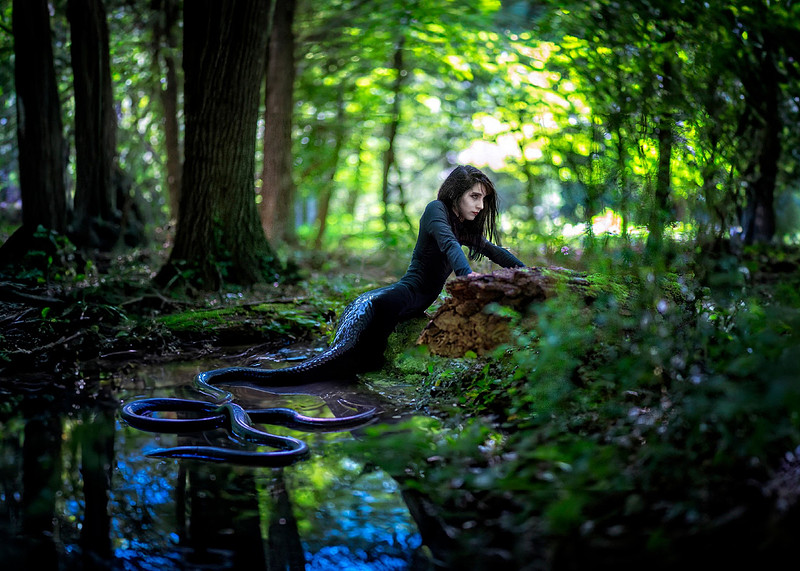
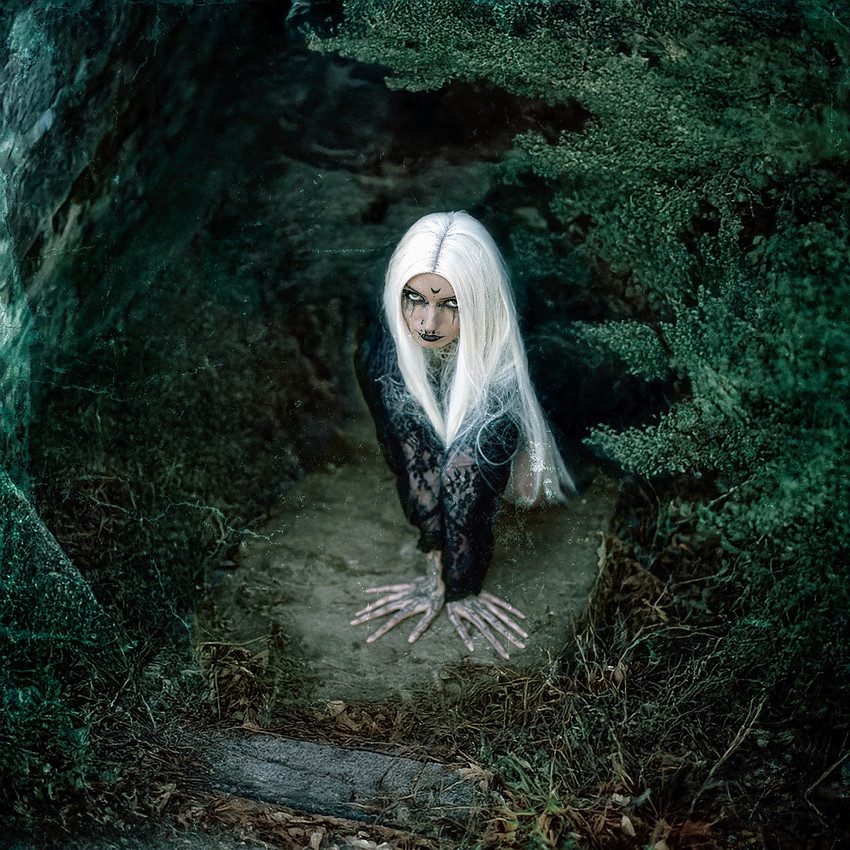
They say the forests of Appalachia, ancient and profound, hold secrets deeper than their shadowed valleys. And among those secrets, whispered in hushed tones around crackling campfires, is the chilling tale of the White Witch. She is not of this world, nor even of the next, but a lost soul, forever bound to the twisting roots and towering pines of the mountains. No one knows how long she has dwelled there, a spectral guardian of the deep woods. Her appearance is a haunting contradiction: hair as white as the purest mountain snow, yet eyes that hold the dark, knowing depths of forgotten caves. She is often seen crawling on the forest floor, her body seemingly contorted, as if forever seeking something lost within the earth. But it is her hands, folk say, that are the most unsettling. Fingers, unnaturally long and skeletal, splayed wide as she creeps through the undergrowth, grasping at unseen things. The old timers warn of her, their voices dropping to a near-silent murmur when her name is spoken. "Beware the White Witch," they caution, their eyes scanning the treeline as dusk approaches. "For she roams the forest at night, drawn to the unwary, the lost, and the curious who dare to venture too deep into her domain." Her truest horror, they say, is not a touch or a visible threat, but a sound – a whisper, soft as the rustling leaves, yet insidious enough to pierce the deepest silence. It begins subtly, a faint breath on the wind, before resolving into the distinct, chilling sound of your own name being called. "Do not answer," the warning echoes through generations. "No matter how clear, how insistent, how urgent that whisper becomes, ignore it. Do not acknowledge her call. For if you reply, if you speak a single word in return, she will know you. She will find you. And once she has you in her gaze, her unnaturally long fingers will reach out, not to harm, but to draw you into her eternal, silent vigil within the darkened woods, a companion in her endless, desperate search for what she can never find." So, if you ever find yourself lost among the ancient trees of Appalachia when the night falls, and a cold breath whispers your name from the unseen shadows, remember the tale of the White Witch. And whatever you do, hold your tongue, turn away, and run.
Near Death Experience
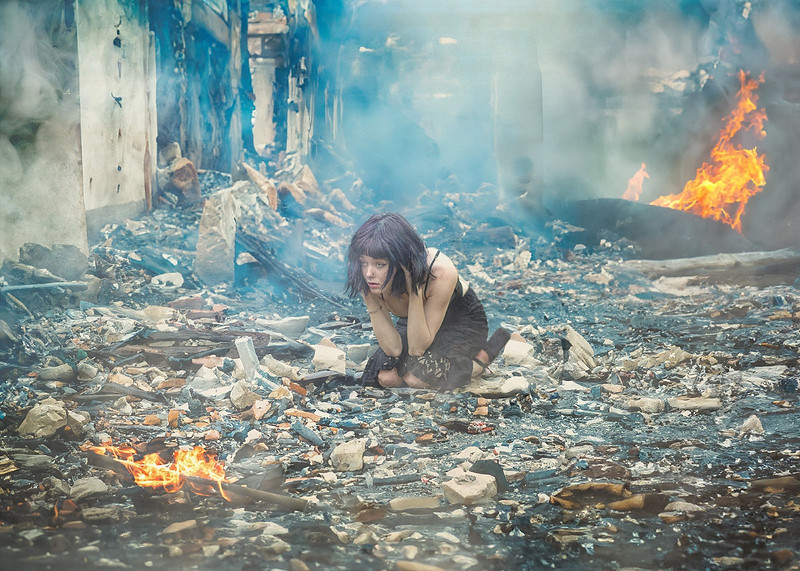
In this evocative piece, "Near Death Experience," we witness a powerful witch engaged in a profound ritual. She stands on the precipice of realms, her energy focused on bridging the divide between the living and the dead. Through an arcane occult ritual, she seeks to part the veil, that mystical barrier separating our world from the spirit realm. This isn't a mere act of observation; it's a dynamic engagement with the unseen. The witch actively manipulates ancient forces, utilizing her knowledge of the occult to tear down the metaphorical curtain and walk among the deceased. It’s a deliberate journey into the ethereal, a conscious decision to commune with those who have passed beyond, and to experience the chilling essence of the afterlife firsthand. The scene is charged with the undeniable power of transformation, a testament to the witch's mastery over profound and often dangerous magical practices.
Sea of Trees ( Aokigahara )
Sea of Trees (Aokigahara): The Witch in the ForestAokigahara, also known as the Sea of Trees (樹海, Jukai), is a dense forest located at the northwest base of Mount Fuji in Japan. Renowned for its haunting beauty and historical associations with folklore and the supernatural, Aokigahara has long captured the imagination of artists, writers, and photographers worldwide. Geography and HistoryAokigahara covers approximately 35 square kilometers and is characterized by its thick, twisted trees and uneven volcanic floor. The forest’s unique topography, shaped by lava flows from Mount Fuji’s past eruptions, creates an almost otherworldly landscape. The dense canopy and lack of wildlife contribute to an uncanny silence, further enhancing the forest’s mysterious reputation. Folklore and the OccultThroughout history, Aokigahara has been the subject of numerous legends and ghost stories. Japanese folklore often describes the forest as haunted by yūrei (幽霊)—restless spirits who are said to wander among the trees. The forest’s association with the supernatural has made it a focal point for tales of witches, spirits, and other occult phenomena. The Witch in the Sea of Trees: Artistic InterpretationThe image featured here—a pale witch with long black hair climbing over a low stone wall in the heart of Aokigahara—draws upon both the forest’s natural mystique and its rich tradition of supernatural storytelling. The figure of the witch, with her spectral appearance and deliberate movement, evokes classic themes of the unknown and the uncanny. The low stone wall, partially reclaimed by moss and foliage, suggests the remnants of forgotten boundaries or ancient rituals, further deepening the sense of mystery. This photograph was created by Jonathan Hall, a Columbus-based photographer specializing in witchcraft and occult imagery. By situating the witch within Aokigahara’s enigmatic landscape, the image bridges Japanese folklore with contemporary interpretations of the supernatural. The interplay of light and shadow, the witch’s haunting gaze, and the forest’s enveloping gloom combine to create a visual narrative that is both unsettling and captivating. Artistic SignificanceWitchcraft and the occult have long served as powerful symbols in art and photography, representing the liminal space between the natural and the supernatural. In this work, the witch is not merely a figure of fear, but a conduit for exploring the mysteries of Aokigahara itself. The photograph invites viewers to contemplate the boundaries between myth and reality, and to consider the enduring allure of places where the ordinary world gives way to the unknown. ConclusionAokigahara’s Sea of Trees remains a potent source of inspiration for artists drawn to the intersection of nature, folklore, and the supernatural. Through evocative imagery such as the pale witch climbing over the stone wall, the forest’s legacy endures—reminding us of the timeless power of myth and the enduring fascination with the occult.
|