 Aelbrun: Spirit of the Dark SpringAelbrun: Spirit of the Dark Spring. A conceptual portrait exploring the ancient, mystical forest witch from Germanic folklore, whose whispers and mists lead the lost to their eternal slumber. Aelbrun: Spirit of the Dark SpringAelbrun: Spirit of the Dark Spring. A conceptual portrait exploring the ancient, mystical forest witch from Germanic folklore, whose whispers and mists lead the lost to their eternal slumber.
Aelbrun is a figure from Germanic folklore, particularly associated with the region surrounding the Black Forest in modern-day Germany. She is typically depicted as a powerful, enigmatic entity deeply connected to the forest's most ancient and hidden places, often characterized as a witch or a spirit of the wild. Tales surrounding Aelbrun frequently center on her ability to manipulate the mists that gather within the deep woods, using them to lure unwary travelers to their doom.
Origins and Nature
The precise origins of Aelbrun are shrouded in mystery, with some accounts suggesting she is not human at all, but rather a primordial spirit of the forest itself. The name "Aelbrun" itself lends credence to this theory. The "Ael-" component, derived from Proto-Germanic roots, implies something ancient, primordial, or even elven/spirit-like. The "-brun" element, from Old Germanic, evokes "dark," "brown" (like deep earth or dark wood), but also hints at a "spring" or "well" – a hidden source of life, magic, and often, mystery. Thus, Aelbrun is often referred to as the "Spirit of the Dark Spring," a title that encapsulates her connection to the deepest, most potent energies of the forest.
This connection is further emphasized in descriptions of her appearance and abilities. She is often depicted with long, flowing dark hair that seems to merge with the shadows and mists of the forest (see image above). Her gaze is intense and captivating, capable of drawing men into her domain. Her clothing, if she wears any at all, is typically dark and flowing, mirroring the deep waters and shadows of her woodland realm.
The Lure of the Mist
Aelbrun's most distinctive characteristic is her ability to control the mists that frequently blanket the Black Forest. These are not merely natural phenomena in the tales; they are extensions of her will, manipulated to disorient and ultimately ensnare those who stray too close to her domain.
The accounts describe Aelbrun as possessing a hauntingly beautiful voice, used to call out to lone travelers. The sound is often described as a whisper or a song, carried on the wind and through the thickening mist. Those who hear it find themselves irresistibly drawn towards its source, losing all sense of direction as the fog grows denser and the forest closes in around them. Once lost within the mist, the travelers rarely find their way out. Some tales suggest they are drowned in hidden pools or ensnared by the forest itself, while others imply a more supernatural fate, lost to Aelbrun's magic or the dark spirits of the woods.
Region and Influence
While tales of Aelbrun are found throughout the Germanic regions, they are most prevalent in the Black Forest area. The dense, ancient woodlands, prone to sudden fogs and shrouded in an atmosphere of mystery and dread, provide a perfect setting for her legend. Local folklore often warns against venturing too deeply into the forest alone, especially at twilight, when Aelbrun's power is said to be at its strongest.
Her influence extends beyond mere cautionary tales. Some scholars suggest that Aelbrun represents a personification of the forest's dangers, a way for ancient communities to understand and respect the power of the natural world. Others see her as a symbol of female power and independence, a figure who rejects societal norms and claims dominion over her own wild domain.
Interpretations and Legacy
Aelbrun's enduring appeal lies in her multifaceted nature. She is both alluring and terrifying, a figure of beauty and deadly power. She embodies the mystery and danger of the untamed wilderness, a reminder of the forces that lie beyond human control.
In modern interpretations, Aelbrun continues to inspire artists and writers. She appears in various forms in fantasy literature and art, often as a powerful witch, a forest spirit, or even a dark goddess. Her image remains potent: a captivating figure emerging from the mist, a whisper on the wind that promises both enchantment and doom.
 Pensive Young Witch in England, c. 1584A pensive young witch, cloaked in black, finds solace against the ancient stones of an 1584 English village. This evocative scene, captured through the lens of Jonathan Hall Photography, brings the rich history of witchcraft to life. Specializing in unique occult and fantasy photography in Columbus, Ohio.
Cicely Greene: The Vanishing Witch of Essex Pensive Young Witch in England, c. 1584A pensive young witch, cloaked in black, finds solace against the ancient stones of an 1584 English village. This evocative scene, captured through the lens of Jonathan Hall Photography, brings the rich history of witchcraft to life. Specializing in unique occult and fantasy photography in Columbus, Ohio.
Cicely Greene: The Vanishing Witch of Essex
Cicely Greene (born circa 1560s, disappeared 1584) was a figure of local folklore in Essex, England, remembered primarily for her mysterious disappearance following accusations of witchcraft during the English witch trials of the late 16th century. Her story has endured as a cautionary tale and a subject of interest in the study of historical witchcraft and unexplained phenomena.
Early Life and Accusation
Details about Cicely Greene’s early life remain scarce, almost certainly as a result of her never being brought to trial. She is believed to have originated from a modest rural village in Essex. During a time marked by widespread fear of witchcraft, especially in Essex where accusations were common, Greene was formally accused in 1584. The charges against her involved allegations of bewitching livestock, causing illness among children, and practicing harmful magic against her neighbors. These accusations reflected the social and religious tensions of the period, when interest in herbal remedies and nonconformist behavior could easily be misconstrued as witchcraft.
Disappearance
According to legend, Cicely Greene was detained in a securely locked cell awaiting examination by local authorities. The following day, despite the cell door remaining locked and no signs of forced entry or escape, Greene was found to have vanished without a trace. No evidence of struggle or secret passage was discovered, and she was never seen again. This unexplained disappearance intensified local fears and reinforced beliefs in her supernatural abilities. Extensive searches failed to locate her, and no credible sightings were ever reported after her disappearance, even to this day.
Legacy
Cicely Greene’s story has been preserved through oral tradition as a reflection of the paranoia and harshness associated with witch trials. Her vanishing act distinguishes her narrative from many other accused witches, adding a layer of supernatural intrigue. Over time, she has become a symbol of those persecuted during witch hunts and a subject of artistic and literary interpretation. Contemporary works inspired by her story contribute to the ongoing cultural memory of witchcraft in Essex.
References
-
"Local Legends of Rural Essex." Folklore Quarterly, Vol. 42, No. 3 (1916).
-
Finch, A. P. "The Vanishing Accused: Unexplained Disappearances in English Witchcraft Records." Journal of Historical Enigmas, Vol. 7, Issue 1 (1922).
-
Davies, M. R. "Witch Persecution in 16th Century Essex." Studies in Early Modern History, (1955).
Introduction
Circe is one of the most enigmatic figures in Greek mythology, renowned for her extraordinary beauty and formidable magical abilities. She is often depicted as a powerful enchantress who lives in isolation, using her sorcery to transform those who cross her path. Traditionally portrayed as an experienced and dangerous sorceress, modern reinterpretations sometimes depict her as a younger figure, standing on the threshold of her own myth.
Origins and Mythology
Circe is the daughter of the Titan Helios, god of the sun, and the ocean nymph Perse. As a divine being, she possesses an innate mastery over magic, particularly in the art of transformation and potion-making. She resides on the island of Aeaea, an isolated land often associated with enchantment and mystery.
Her most famous appearance is in Homer's Odyssey, where she encounters Odysseus and his crew. Using her potions, she transforms Odysseus’s men into swine, reflecting their baser instincts. Odysseus, with the aid of the god Hermes, resists her magic and ultimately becomes her lover. He remains on Aeaea for a year before continuing his journey home.
Symbolism and Interpretations
Circe embodies themes of power, exile, and transformation. She is both feared and desired—a woman of unmatched beauty and knowledge who exists on the margins of human society. Often associated with the duality of wisdom and peril, she represents the complex archetype of the witch—capable of granting knowledge and assistance, yet just as easily capable of vengeance.
Visual representations of Circe often capture her isolation, placing her in remote landscapes that emphasize her separation from the mortal world. In some modern interpretations, she is depicted as a young woman, surrounded by the vastness of nature, caught in a moment of contemplation before fully embracing her magical gifts. The contrast between beauty and solitude underscores her mythological role as both an exile and a force of transformation.
Circe in Modern Retellings
Circe continues to be a source of inspiration in literature and art, with contemporary interpretations adding depth to her character. Madeline Miller’s novel Circe reimagines her story as one of self-discovery, exploring her struggles against divine expectations and her pursuit of autonomy. In this version, she is not merely the enchantress who obstructs Odysseus’s journey but a fully realized individual shaped by love, betrayal, and the search for identity.
Legacy
Circe remains one of mythology’s most enduring figures, embodying the shifting perceptions of witches and women who wield power. Whether feared or revered, she represents the essence of transformation—both physical and spiritual. In artistic depictions, she is often shown alone, gazing into the distance, suggesting a moment of decision before embracing her fate.
 Umbrae SilvaeIn the heart of the shadows, the offering is made—bone to darkness, silence to the unseen. The forest listens. Umbrae SilvaeIn the heart of the shadows, the offering is made—bone to darkness, silence to the unseen. The forest listens.
In silvis obscuris, nocte sine luna,
Mulier umbrarum, vultu sine nomine,
Calvaria arietina, cornibus curvatis,
Sacra ritus tenebris sub tegmine.
Vox silentii, susurrans per folia mortua,
Arcanum vetus, maleficium vetustae,
Sanguis ignotus in terra manet,
Animam tenet, in aeternum damnata.
Ferae silent, caeli atri fulgent,
Fatum obscurum in oculis scintillat,
Haec est domina noctis, umbrae regina,
Mors et vita in manu eius iacent.
Exspecta, viator, ne aspicias,
Nam in tenebris veritas latet,
Calvaria arietina, portans maledictum,
In silvis, ubi spiritus vagantur.
 JHPMM339928A3ZEN JHPMM339928A3ZEN
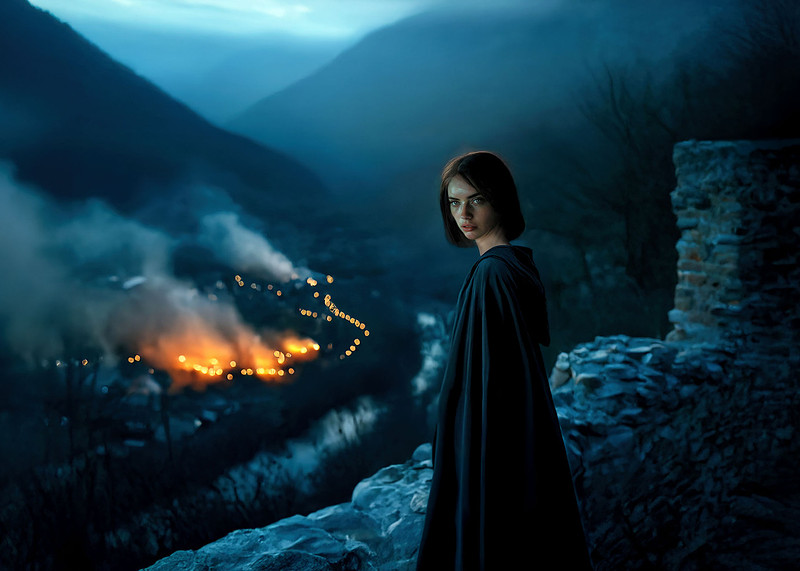
The annals of medieval history are often filled with the grand narratives of kings and battles, but behind these sweeping events lay countless individual stories of resilience, terror, and heartbreak. Such is the unspoken tale captured in a moment frozen in time: a woman, standing by a crumbling castle wall, her face etched with sorrow and a desperate plea in her eyes as she gazes not at the inferno below, but directly at us. This is the story of Adeline de Montaigne, a noblewoman who bore witness to the very real and brutal context of the Black Prince's Great Chevauchée of 1355.
The Scourge of the South: The Black Prince's Campaign
In the autumn of 1355, Edward, the Black Prince, heir to the English throne and famed for his prowess in battle, unleashed a devastating campaign across the rich lands of French-held Gascony and Languedoc. This was no mere skirmish; it was a chevauchée, a calculated act of war designed to terrorize the populace, destroy the enemy's economic base, and force the French king into open battle. From Bordeaux, his army, composed of English and Gascon soldiers, swept eastward, leaving a trail of destruction in its wake.
Villages, farms, and unfortified towns were systematically put to the torch. Crops were burned, livestock slaughtered or seized, and communities shattered. The objective was clear: break the will of the people and deny resources to the French crown. Though mighty strongholds like Carcassonne itself might resist capture, their surrounding lower towns and the vast rural expanse were vulnerable. It was into this landscape of fire and fear that Adeline de Montaigne’s experience unfolds.
Adeline's Vigil: A Gaze of Despair
This image finds Adeline de Montaigne upon the weathered ramparts of a small, overlooked, castle. Perched precariously on a hill, its walls bear the marks of time, and of earlier conflicts. The light is fading, a bruised twilight sky offering little comfort. Below, in the winding valley, a small village that once hummed with life now writhes in the agony of flame and smoke. The orange glow of the fire casts a hellish light on the rising plumes, painting a grim tableau against the encroaching darkness. A small river, usually a source of life, now reflects the terrible spectacle.
Adeline, however, is not looking at the burning village. Her gaze is fixed directly upon us, the viewers. Her face, framed by the encroaching shadows, reveals a profound sadness, tinged with alarm and perhaps a silent question. It’s a gaze that cuts through centuries, a plea for understanding, a raw expression of the human cost of war. She looks as if she is reaching out, sharing her profound dismay and fear, perhaps for someone she cares about who is down amidst the chaos.
The Unspoken Legacy
Adeline de Montaigne’s vigil offers a rare, intimate glimpse into the profound suffering wrought by medieval warfare. Her story is part of the tapestry of countless lives irrevocably altered by such campaigns. Many individuals, noble and commoner alike, witnessed such horrors from the relative safety of castle walls, or suffered them directly in the fields and villages below.
Adeline's silent plea reminds us that history is not just about dates and battles; it is about the lives irrevocably altered by them. Her expression, captured in this single, poignant image, becomes a testament to the enduring human capacity for empathy and the shared, timeless sorrow of witnessing destruction. She stands as a poignant reminder of the vulnerable individuals who were caught in the web of medieval warfare, her silent despair a testament to the human capacity for both suffering and profound, empathetic connection across time.
 JHPSR994942F2WEB JHPSR994942F2WEB
Life in Cluj Under the Shadow of Accusation:
The town of Cluj (then known as Kolozsvár) in Transylvania during the late 16th century was not immune to the widespread anxieties surrounding witchcraft that gripped much of Europe. While not under the direct rule of a powerful Prince-Bishop like Fulda, Cluj experienced its own wave of accusations, notably influenced by the actions of individuals such as the judge György Igyártó. In this environment, where superstition and social tensions intertwined, personal disputes could quickly escalate into life-threatening accusations of malevolent magic.
Elisabeta Văduva ( c. 1555 – executed 1580 ) was a 25-year-old seamstress living in Cluj with her husband, Gheorghe, a farmer. Their lives took a dark turn when several women from their community accused Elisabeta of using witchcraft. These accusations centered on misfortunes that had befallen them: the alleged cursing of their livestock and, most gravely, causing one of their young children to become lame. The underlying tensions may have been exacerbated by a land dispute between Gheorghe and the husband of one of the accusers, suggesting that personal animosity played a significant role in the unfolding tragedy.
False Accusation, Torture, and Steadfast Denial:
Based on these accusations, fueled by local grievances and the prevailing belief in witchcraft, Elisabeta Văduva was brought before the authorities, likely under the purview of figures like György Igyártó. Unlike Walpurga Hess, Elisabeta bravely maintained her innocence. Despite being subjected to days of brutal torture, aimed at coercing a confession, she steadfastly refused to admit to being a witch or to having committed any of the acts of which she was accused. Her resilience in the face of unimaginable pain stands as a testament to her innocence and strength of character.
The Cruel Logic of the "Swimming Test" and a Tragic End:
Frustrated by Elisabeta’s unwavering denials, the judge, György Igyártó, resorted to what was believed to be an infallible method of determining guilt or innocence: the "swimming test." This archaic and dangerous practice rested on the superstition that pure water would reject a witch, causing her to float, while an innocent person would sink. This cruel ordeal, also known as "ducking," was employed in various parts of Europe, including 17th-century England, as a supposed means of divine judgment.
Bound with ropes, Elisabeta was led to the nearby Sătăs River. The image above represents her final moments, a heart-wrenching glance back at her husband with the river looming in the background, before she was forced into the cold water. As predicted by the flawed logic of the test, Elisabeta sank and tragically drowned. In this horrific manner, her innocence was proven only in death, a devastating indictment of the fear and ignorance that characterized the witch hunts.
A Stark Reminder of Injustice in Transylvania:
The story of Elisabeta Văduva of Cluj serves as a chilling reminder of the human cost of the witch trials that swept through Europe, including Hungary and Transylvania. Accused based on personal disputes and subjected to torture, she maintained her innocence to the very end, only to become a victim of a barbaric test that equated sinking with innocence and floating with guilt. Elisabeta’s tragic fate underscores the dangers of allowing fear and prejudice to dictate justice, and her story stands as a poignant symbol of the countless innocent lives lost during this dark period of history.
 JHPEF990919WEB JHPEF990919WEB
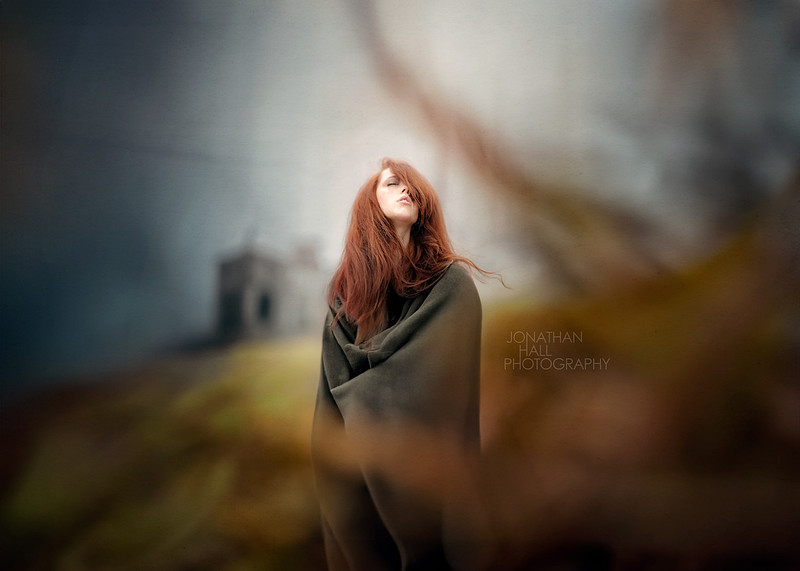
Éloïse Fournier (born c. 1616) was a young woman residing in Loudun, France, who was tried and executed for witchcraft in 1634. Her case is notable for her youth at the time of her arrest, the sensational accusations leveled against her, and her defiant conduct throughout her trial despite enduring torture.
Accusations and Trial:
In the year 1634, Éloïse Fournier was arrested and charged with a series of grave acts of sorcery. The primary accusation against her was the desecration of a local graveyard. Witnesses, whose testimonies remain largely unverified and potentially influenced by the highly charged atmosphere surrounding the infamous Loudun possessions, claimed to have observed Fournier exhuming recently buried corpses under the cover of night. She was further accused of employing malevolent witchcraft to bewitch these bodies, animate them, and compel them into her service.
The trial proceedings were overseen by Jean de Laubardemont, a royal commissioner sent to Loudun to investigate alleged demonic possessions and related accusations of witchcraft. The trial was marked by Fournier's unwavering denial of all charges. Despite her youth and the severity of the accusations, she reportedly displayed remarkable defiance in the face of the court. Accounts suggest she vehemently denounced her accusers as liars, challenging the validity of their testimonies and the supposed evidence presented against her. Furthermore, she is noted for her outspoken disdain towards Laubardemont, allegedly leveling insults and refusing to show him deference.
Torture and Execution:
In an attempt to elicit a confession, Éloïse Fournier was subjected to multiple instances of torture, a common practice in witchcraft trials of the era, particularly in high-profile cases like those in Loudun under the authority of commissioners like Laubardemont. However, historical records indicate that she steadfastly maintained her innocence and refused to confess to any of the alleged crimes, even under extreme duress.
Despite her persistent denials and the lack of a confession, the court, under the authority of Commissioner de Laubardemont, ultimately found Éloïse Fournier guilty of the charges brought against her. In accordance with the prevailing laws and beliefs regarding witchcraft, she was sentenced to death by burning at the stake. The execution was carried out publicly in Loudun, contributing to the already intense atmosphere surrounding the alleged demonic activities in the town.
Legacy:
The case of Éloïse Fournier, unfolding within the context of the notorious Loudun possessions and the investigations led by Jean de Laubardemont, serves as a poignant example of the tragic consequences of the widespread fear and paranoia surrounding witchcraft in 17th-century France. Her youth, the macabre nature of the accusations, her defiant stance during the trial, and her unwavering silence under torture highlight the injustices and brutality inherent in the witch trials of the period. While overshadowed by the more famous events in Loudun, her story stands as a stark reminder of the vulnerable individuals who were caught in the web of superstition and judicial persecution during this tumultuous time, her unbroken spirit a testament to the human capacity for resistance even in the face of unimaginable suffering.
 JHPKP323114A6WEB JHPKP323114A6WEB
Walpurga Hess (c. 1654 — executed 1679), was an inhabitant of Geisa, a town within the Prince-Bishopric of Fulda, whose life was brutally extinguished by the widespread witchcraft accusations that terrorized the region during the intense persecutions of the late 17th century. Living under the direct jurisdiction of the Fulda Prince-Bishops, Walpurga’s case illustrates the devastating impact of fear and the ruthless pursuit of alleged witches on individuals and communities.
Life in Geisa Under a Climate of Fear:
Geisa, firmly within the Prince-Bishopric of Fulda, existed under the absolute authority of the Prince-Bishops, whose power extended to all aspects of life. The brutal witch hunts orchestrated by figures like Prince-Bishop Balthasar von Dernbach instilled a pervasive climate of fear and suspicion throughout the Bishopric. The residents of Geisa lived with the stark reality of torture and public executions of those accused of witchcraft in Fulda and surrounding areas, creating an environment where personal tragedies could easily be attributed to malevolent magic.
Walpurga Hess was a young woman living in Geisa during this period. The accusations that led to her demise began with specific local grievances fueled by the prevailing fear. Anna Schmidt, a woman in Geisa, publicly accused Walpurga of using malevolent magic to cause the death of her infant child. This accusation, born out of grief and the belief in witchcraft, quickly gained traction within the community. Adding to this, Elsbeth Müller accused Walpurga of using spellcraft to make her young child gravely ill. These accusations, arising from the anxieties of motherhood and the fear of unseen forces, placed Walpurga in grave danger within the already volatile atmosphere of the Fulda witch hunt.
Arrest, Prolonged Torture, and Coerced Confession:
Following these grave accusations, Walpurga Hess was arrested by local officials acting under the authority of the Fulda Prince-Bishopric. Consistent with the practices of the Fulda witch trials, she was subjected to weeks of relentless torture aimed at extracting a confession of witchcraft. Under this extreme duress, and after enduring unimaginable pain and psychological torment, Walpurga Hess eventually confessed to the charges against her. She famously stated, “Ja, ich habe dem Teufel gedient.” ( Yes, I served the devil. ) This confession, though coerced and undoubtedly false, provided the authorities with the justification they sought to condemn her.
Condemnation and Execution:
Despite the fact that her confession was obtained under torture, it was deemed sufficient evidence by the court operating under the auspices of the Fulda Prince-Bishop. In 1679, Walpurga Hess, was found guilty of witchcraft. As was the customary and brutal punishment for those convicted of witchcraft in the Fulda territories, she was sentenced to be burned at the stake. Her execution served as a public spectacle, reinforcing the Prince-Bishop’s reign of terror and the consequences of being accused of witchcraft within his domain.
Significance as a Tragic Victim of the Fulda Witch Hunt:
The case of Walpurga Hess of Geisa starkly illustrates the tragic human cost of the Fulda witch hunts. The accusations stemming from personal grief and fear, the prolonged and brutal torture leading to a coerced confession, and the ultimate execution of a young woman highlight the injustice and cruelty of this historical period. Walpurga Hess stands as a poignant symbol of the countless individuals whose lives were destroyed by superstition, fear, and the abuse of power during the Fulda witch hunts. Her story serves as a chilling reminder of the dangers of mass hysteria and the importance of due process and justice.
 JHPUK39392595AWEB JHPUK39392595AWEB
Rebecca Lemp was a German woman who lived in Nördlingen. She was the wife of Peter Lemp, a respected accountant, and the mother of six children. Her life took a tragic turn when she was accused of witchcraft during the intense witch hunts that swept through Europe in the late 16th century.
Accusation and Trial
In April 1590, while her husband was away, Rebecca was arrested based on accusations from another woman already condemned as a witch. Despite proclaiming her innocence, she was subjected to brutal torture, including the thumbscrew, Spanish boots, and strappado. After enduring this torture five times, she confessed to witchcraft.
Confession and Imprisonment
Under duress, Rebecca confessed to making a pact with the devil, claiming she had renounced God and used powders and liquids to harm others. She even named accomplices. During her imprisonment, she wrote desperate letters to her husband and children. In one intercepted letter, she begged for poison to end her suffering. This request was used against her, resulting in an additional charge of attempted suicide.
Peter Lemp’s Defense
Peter Lemp fervently defended his wife, attesting to her piety and innocence. He wrote impassioned letters to the court, arguing that her confession was coerced. He described her as “honest, chaste, and pious,” noting her religious devotion and the absence of any prior suspicion against her. His pleas, however, were ignored.
Execution
Despite her husband’s efforts, Rebecca Lemp was burned at the stake on September 9, 1590. Her execution was a public spectacle, witnessed by her family. She was one of 32 women executed for witchcraft in Nördlingen during that period.
Legacy
Rebecca Lemp’s story is a chilling example of the injustice and cruelty of the witch trials. Her case highlights the use of torture to extract confessions and the vulnerability of women in a society gripped by fear and superstition. Her letters, preserved through history, offer a poignant and personal perspective on the horrors of this dark chapter in European history.
 JHPEG225915WEB JHPEG225915WEB
Ursley Kemp was an English woman residing in the parish of St. Osyth, Essex, who was accused of witchcraft in 1582. Her case is a notable example of the localized witch trials that occurred in England during the late 16th century and provides insight into the prevailing beliefs and anxieties surrounding magic and maleficium in that era.
The accusations against Kemp arose within her community and centered on instances of illness, death, and misfortune that were attributed to supernatural causes. Key to the accusations were the alleged possession of familiars – spirits believed to assist witches in their craft. Kemp reportedly confessed to having four such entities: Tyttey (a grey cat), Jack (a black toad), Piggesnie (a white lamb), and Sparrow (a black and white bird). These creatures, often interpreted within a contemporary witchcraft framework as symbolic representations of a witch's connection to the animal world or inner aspects of the self, were presented during the trial as demonic agents.
Kemp's confession, likely obtained under pressure consistent with the judicial practices of the time, detailed acts of maleficium, or harmful magic. These included causing the illness of a local child and the death of another. Such accusations reflect the societal anxieties surrounding unexplained ailments and the tendency to attribute them to malevolent supernatural influence.
The trial of Ursley Kemp highlights several key aspects of historical witchcraft accusations:
- The Role of Familiars: The belief in animal familiars as tangible evidence of a pact with malevolent forces was a common feature in English witchcraft trials.
- Community Dynamics: Accusations often stemmed from within the local community, fueled by interpersonal conflicts, suspicion, and the need to explain misfortune.
- Gendered Nature of Accusations: While not exclusively the case, women were disproportionately accused of witchcraft, reflecting prevailing societal views on female agency and potential for transgression.
- The Nature of Confessions: Confessions obtained during this period are often viewed with critical scrutiny by modern historians, considering the potential for coercion and the influence of leading questions.
Ursley Kemp was found guilty and subsequently executed by hanging in 1582. Her story serves as a historical marker of the social and legal frameworks that led to the persecution of individuals accused of witchcraft. For contemporary practitioners of witchcraft, Kemp's case, and others like it, underscore the historical misinterpretation and demonization of practices that often involved herbalism, folk healing, and a deep connection to the natural world – elements that resonate with many modern witchcraft traditions. The memory of Ursley Kemp invites reflection on the historical injustices faced by witches, and those labeled as witches, and the enduring need for understanding and tolerance regarding diverse spiritual and cultural practices.
 JHPLC20039WEB JHPLC20039WEB
When we think of Scotland’s witch trials, one name rises above the rest-not for infamy, but for the extraordinary richness of her story: Isobel Gowdie. Her confessions, given in 1662 in the village of Auldearn near Nairn, remain among the most detailed and imaginative records of European witch folklore, and have captivated historians and witchcraft enthusiasts for centuries.
A Life Shrouded in Mystery and Magic
Little is known about Isobel’s everyday life. She was likely a cottar’s wife, living on the edge of poverty in the rugged Moray coast, a region steeped in ancient traditions and legends. But it is her voice-recorded in four confessions over six weeks-that sets her apart. Unlike many other accused witches, Isobel’s testimony was given with remarkable creativity and detail, and, according to records, apparently without the use of violent torture.
The Confessions: A Tapestry of Fairy Lore and Witchcraft
Isobel’s confessions are a treasure trove for anyone fascinated by witchcraft and the occult. She spoke of joining a coven of thirteen, meeting the Devil in the old kirk at Auldearn, and renouncing her baptism in a pact of power. Yet, her tales go far beyond the typical witch trial narrative. She described flying through the night on magical horses, slipping away from her sleeping husband with only a broom left in her place. She recounted feasts with the Queen of the Fairies-also called the Queen of Elphame-at Downie Hill, where water bulls roamed and magic thrived.
Isobel claimed the power to shapeshift into animals-a jackdaw, a hare-and told of being chased by dogs while in animal form, only to escape by chanting spells. She described crafting clay effigies to cast spells and flicking elf arrows, enchanted by the Devil and fairy helpers, to bring illness or death. Her stories were filled with vivid, poetic language and a sense of wonder, blending Christian demonology with the ancient fairy faith of Scotland.
A Survivor’s Story
Isobel’s confessions likely came at a time of great personal and social turmoil. The local minister, Harry Forbes, was a zealous opponent of witchcraft, and accusations had likely swirled for some time before her arrest. While solitary confinement and duress may have played a role in her testimony, modern scholars see Isobel as a gifted storyteller whose imagination and oral tradition preserved a unique blend of Scottish folklore and occult belief.
Legacy and Inspiration
The fate of Isobel Gowdie remains uncertain-some believe she was executed, others that she faded back into obscurity. What is clear is her enduring legacy. Her confessions have inspired songs, books, plays, and even a symphony, The Confession of Isobel Gowdie by James MacMillan. She is celebrated not only as Scotland’s most famous witch, but as a symbol of resilience, creativity, and the power of storytelling in the face of fear and oppression.
Why Isobel Matters Today
For modern witchcraft enthusiasts, Isobel Gowdie is more than a historical figure-she is a beacon. Her testimony preserves a world where magic, nature, and the unseen were woven into daily life. She reminds us that the witch’s path is as much about imagination, courage, and connection to tradition as it is about spells and rituals.
In Isobel’s words and spirit, we find the heart of the witch: wild, wise, and wonderfully alive.
 jhp_lilith_eldara jhp_lilith_eldara
Lilith is a significant figure from the ancient Near East, whose story has been shaped and understood in diverse ways across various cultures and spiritual traditions. While often vilified in patriarchal narratives, Lilith has been reclaimed by many modern witches and spiritual seekers as an empowering archetype of independence, primal feminine energy, and fierce self-determination.
Ancient Origins and Evolution: Lilith’s roots can be traced back to Sumerian and Akkadian demonology, where she appears as a powerful female spirit associated with the night and wild places. In later Babylonian Jewish folklore, she emerges prominently in texts such as the Alphabet of Ben Sira as the first woman created alongside Adam. Rejecting subservience and equality, Lilith chose to leave the Garden of Eden, asserting her autonomy and refusing to lie beneath Adam. This foundational act of self-sovereignty is central to her modern positive interpretations.
Reclaiming the Narrative: Traditional patriarchal narratives often portray Lilith as a demoness, a seductress, and a threat to patriarchal order, particularly through the lens of fear surrounding female sexuality and independence. However, contemporary perspectives, especially within witchcraft and Goddess spirituality, actively reclaim Lilith as a potent symbol of:
- Unapologetic Independence: Lilith’s refusal to submit to Adam’s dominance is celebrated as an assertion of female agency and the right to self-determination. She embodies the courage to defy societal expectations and forge one’s own path.
- Primal Feminine Power: Lilith is seen as a wellspring of raw, untamed feminine energy, connected to instinct, intuition, and the cyclical rhythms of nature. She represents a reclaiming of the sacred feminine outside of patriarchal control and definition.
- Sexual Sovereignty: Lilith’s association with sensuality and her rejection of imposed sexual roles are viewed as empowering. She embodies the right to own one’s sexuality and desires without shame or constraint.
- Shadow Work and Transformation: Lilith’s darker aspects, often maligned, are embraced as integral to personal growth and shadow work. She encourages facing one’s inner darkness, embracing the totality of the self, and undergoing profound transformation.
- Fierce Protection: As a figure associated with the marginalized and those who have been oppressed, Lilith is also seen as a fierce protector of the vulnerable and a symbol of resistance against injustice.
Lilith in Modern Witchcraft: This reclamation has led to Lilith's significant role in modern witchcraft, where she is a powerful ally and a source of inspiration. She is invoked in rituals and workings related to:
- Empowerment and Self-Love: Connecting with Lilith can aid in cultivating self-acceptance, inner strength, and a deep sense of personal power.
- Setting Boundaries: Her story of defiance resonates with those seeking to establish and maintain healthy boundaries in their lives.
- Shadow Work and Integration: Lilith’s energy can facilitate the exploration and integration of the shadow self, leading to greater wholeness.
- Independent Magic: She is often seen as a patron of those who walk solitary paths or who challenge conventional magical practices.
- Reclaiming Feminine Power: Lilith’s archetype supports the dismantling of patriarchal conditioning and the embracing of authentic feminine strength.
Honoring Lilith: Witches who honor Lilith may connect with her through meditation, visualization, altar work featuring symbols associated with her (such as the crescent moon, owls, snakes, and dark flowers), and by embodying her principles of independence and self-sovereignty in their lives.
In conclusion, Lilith transcends the stigmatized portrayals of the past to emerge as a potent and empowering figure for many modern witches. She embodies the courage to choose oneself, the power of untamed feminine energy, and the unwavering spirit of freedom. By embracing Lilith, individuals can connect with a powerful archetype of self-sovereignty and reclaim their own inner strength and independence.
 JHPLA010157WEB
The Diabolic Pact JHPLA010157WEB
The Diabolic Pact
The idea of the “diabolic pact”-a formal agreement between a witch and the Devil-stands at the heart of Europe’s most enduring and sinister witchcraft legends. But this concept, along with the image of the witches’ Sabbath, is a relatively late development in the history of witch beliefs, shaped as much by church authorities and cultural anxieties as by folklore itself.
How the Diabolic Pact Emerged
In early Christian Europe, accusations of witchcraft typically focused on folk magic, healing, or minor curses. By the 15th century, however, church authorities began to claim that witches were not just local troublemakers, but heretics who had entered into explicit, often ritualized pacts with the Devil. These pacts could be oral or written-sometimes imagined as signed in blood-and were believed to grant supernatural powers in exchange for the witch’s soul. The “witch’s mark,” an insensitive spot on the body, was said to be left by the Devil as proof of the pact.
The Witches’ Sabbath: Nocturnal Gatherings and Dark Rituals
Alongside the diabolic pact, the idea of the witches’ Sabbath became central to witch lore. The Sabbath was depicted as a secret, nocturnal gathering where witches renounced Christianity, pledged loyalty to Satan, and took part in forbidden rites. These gatherings, described in vivid detail by demonologists, allegedly included everything from flying on broomsticks and wild dancing to blasphemous rituals and even the sacrifice of infants.
The Sabbath was said to be a place where witches learned the “black arts,” received instructions from the Devil, and conspired to harm the innocent. This narrative was reinforced by popular books like the Malleus Maleficarum (1486), which cemented the association between witchcraft, heresy, and Satanic conspiracy.
Propaganda, Persecution, and Cultural Impact
These ideas did not arise in a vacuum. Church authorities, concerned about heresy and social disorder, actively promoted the image of the witch as a diabolical conspirator. Many elements of the Sabbath stereotype-such as baby-eating and desecration-were borrowed from accusations against other marginalized groups, including heretics, Jews, and lepers. The spread of these ideas through illustrated pamphlets and books helped fuel mass hysteria and witch hunts across Europe.
Lasting Legacy
The diabolic pact and the witches’ Sabbath have left a lasting mark on Western culture. Their imagery-witches flying by night, cauldrons bubbling, secret rites in the dark-remains central to how many imagine witchcraft today. While historians now recognize these stories as products of fear, propaganda, and misunderstanding, they continue to shape art, literature, and popular culture.
Understanding the history of the diabolic pact reveals how deeply myth and reality can intertwine, and how powerful stories can be in shaping both fear and fascination around witchcraft.
 A witch stands alone in a desolate landscape A witch stands alone in a desolate landscape
 ExorcismThis dramatic image, titled "Exorcism," captures a powerful moment of spiritual release as a figure bends backward, a thick plume of black smoke erupting from their body. It embodies the intense energy of banishing dark forces, a striking example of the profound themes explored by Jonathan Hall Photography, a Columbus, Ohio photographer specializing in witchcraft and occult artistry. ExorcismThis dramatic image, titled "Exorcism," captures a powerful moment of spiritual release as a figure bends backward, a thick plume of black smoke erupting from their body. It embodies the intense energy of banishing dark forces, a striking example of the profound themes explored by Jonathan Hall Photography, a Columbus, Ohio photographer specializing in witchcraft and occult artistry.
|
Archive
January
February
March
April
May
June
July
August
September
October
November
December
January
February
March
April
May
June
July
August
September
October
(1)
November (1)
December
|
|
|
|
|
January
February
March
April
May
June
July
August
September
October
November
December
|
|

